
What is Brand DNA?
Brand DNA is the structured profile of your brand — logos, palette, fonts, voice, audience, positioning and mood — that every creative Fotyra makes reads first.
On this page5
Before Fotyra draws a single frame, it reads a profile of your brand: the logos, palette and fonts, the way you speak, who you sell to and what you stand for. That profile is your Brand DNA. It is built from your website, lives on the Brand DNA page of every project, and is the first thing every ad, product shot and film consults.
Reading the page
Open a project and click Brand DNA in the sidebar under Brand Intelligence. A numbered jump strip runs across the top; click any entry to scroll to that section without changing anything.
First comes the Brand Snapshot, a read-only digest of the whole profile on one screen. The top row carries the primary logo, a description with industry, stage and model tags, a Data points counter and the Mood & Energy chip. Then the brand's promise as a quote, a row of stat tiles for markets, channels, competitors and differentiators, and two columns: Brand Colours with the dominant swatches marked and a Typography specimen sampled from your own site on the left, the Voice Profile with tone, formality, energy and humour meters, personality chips and tone by platform on the right. Further down sit the primary audience, key differentiator and positioning, what moves the customer, and the active channels. The small arrow beside each heading (View details) jumps to the section that owns the data.
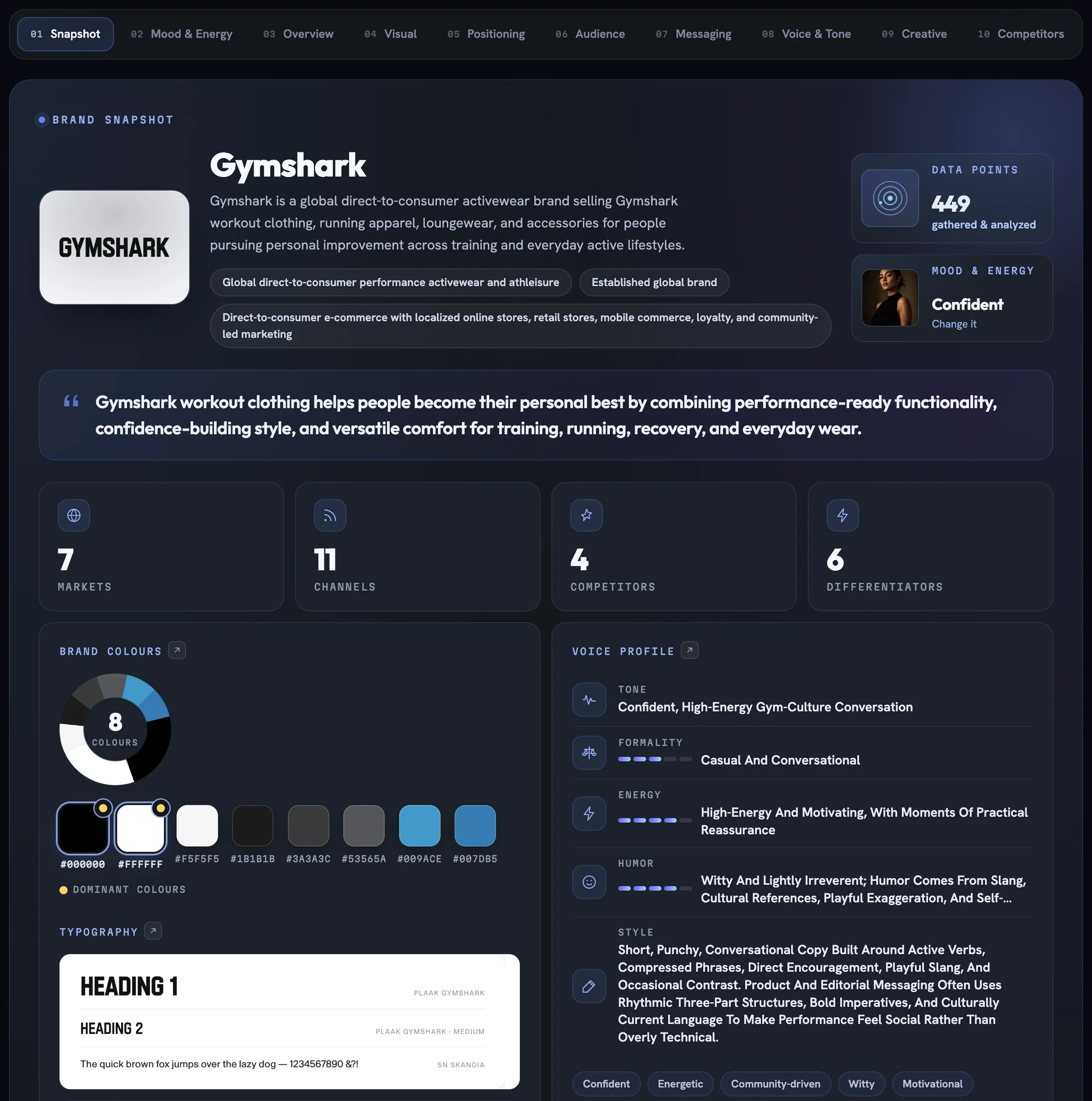
Below the snapshot each section is a collapsible card. The badge beside the title counts the fields it holds; click the title or the chevron to open it. Inside, each text or list field has a small Edit pencil, and anything the crawl could not find reads Not set.
Why it comes before everything else
Fotyra's Creative Director never guesses at your colours or your tone — it looks them up here. Get the profile right and everything downstream comes out on-brand; leave it thin and the creative has to guess.
The palette and logos decide which colours and marks land on a static. The fonts decide the typography of text layers. Voice and messaging shape scripts and copy, the audience fields steer the hooks, and Mood & Energy sets the emotional direction of a film.
What the profile holds
The profile has nine sections, always in the same order, each building on the last.
- Mood & Energy — one detected feeling (Confident, Warm, Playful…) that steers every film until you change it.
- Brand Overview — name, description, industry, stage and business model.
- Visual Identity — logos, colours, fonts, the design, image, lighting and composition styles, and visuals to avoid.
- Brand Positioning — the main promise, differentiators, positioning statement and reasons to believe.
- Target Audience — who buys, what they want, their pain points and buying triggers.
- Brand Messaging — the messaging pillars your copy is built on.
- Brand Voice & Tone — voice attributes, writing style, formality, energy and humour levels, tone by platform, and examples of copy to follow and avoid.
- Brand Creative Direction — preferred formats, moods, environments and model types, with style notes for cinematic, UGC, static and B-roll work.
- Competitive Landscape — named competitors, their strengths, weaknesses and ad angles, and what not to copy.
Versions and edits
Every save or restore writes a new version; nothing is overwritten or deleted. Pick an older Version N from the dropdown under the title and the page turns read-only, and Restore Version N copies it forward as the new latest version.
When a line reads wrong, fix the line rather than rebuild the profile — Editing your Brand DNA walks through edits, per-section rewrites and full rebuilds.
The charts drawn from the data
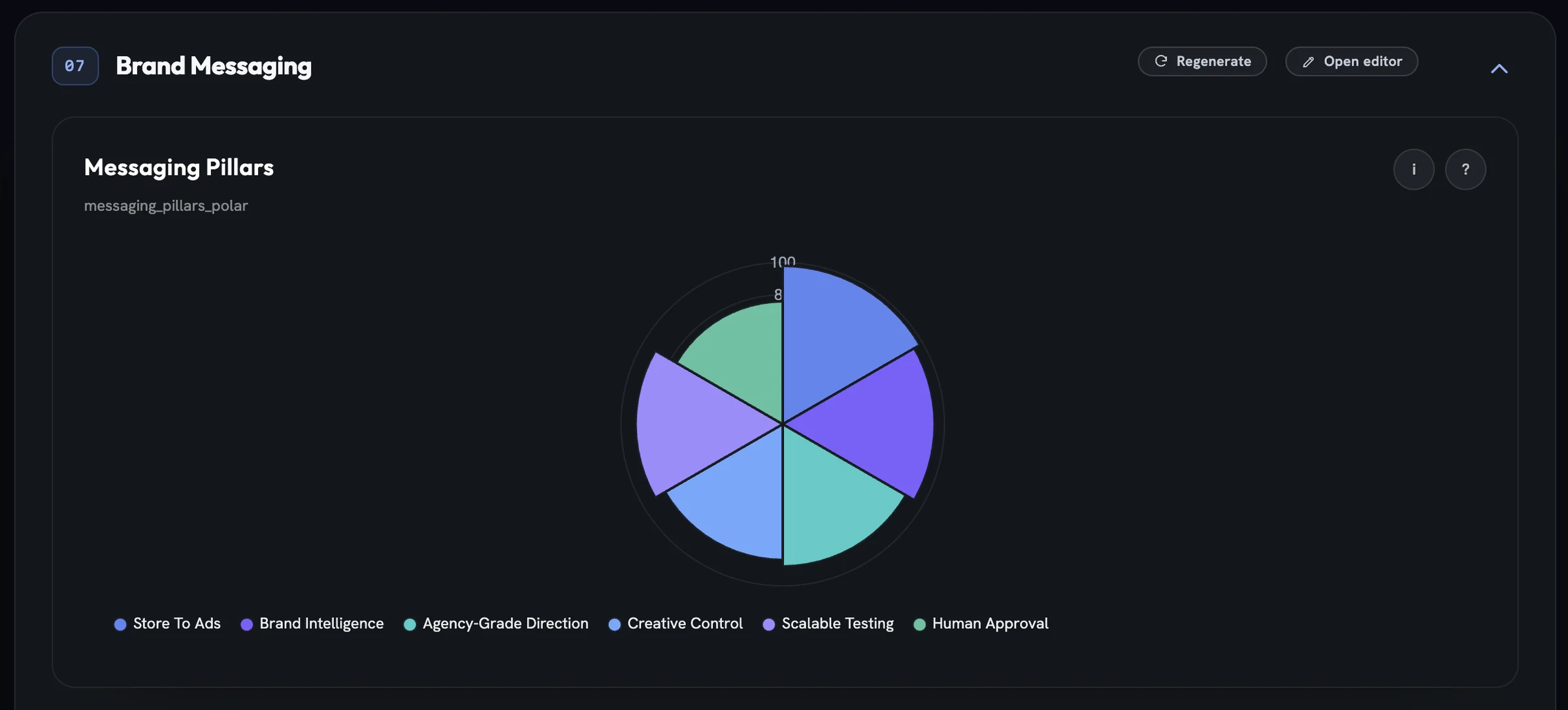
Several sections also carry charts drawn from the data — a colour palette, brand scores, audience pain points and buying triggers, messaging pillars, tone by platform and competitor scores.
More in Start here
Read enough. Make one.
Point Fotyra at your store and do exactly what this guide describes, on your own brand.