Most beauty brands do not have a product problem. They have a creative problem.
The product may be good. The packaging may look great. The website may be polished. But when the same product enters a crowded Instagram, TikTok, Facebook, YouTube, or search environment, the creative has only a few seconds to make its case.
That is why creating beauty product ads is not simply about making a beautiful product image. The strongest beauty advertising starts with the product, the customer, and the reason to believe. Then it turns that information into different creative angles, hooks, visuals, formats, and tests.
This guide explains what beauty product ads are, what makes them effective, which formats are worth testing, how to create them for different platforms, how to use AI without making the work generic, and how to build a repeatable testing system.
TL;DR: Beauty product ads are paid creative assets that promote beauty products through images, video, demonstrations, creator content, offers, or storytelling. The best beauty ads make the product easy to understand and give the viewer a clear reason to care. A useful structure is:
Hook → Product → Benefit → Proof → CTA
Beauty brands should test different creative angles across static ads, UGC, product demonstrations, tutorials, Reels, TikTok videos, carousels, and other platform-native formats instead of relying on one hero ad.
In 2026, this matters even more because beauty discovery is spread across social media, ecommerce, search, retail platforms, and AI-assisted research. Tinuiti’s 2026 research found that half of monthly beauty shoppers discover products through social media, while 38% of surveyed beauty shoppers had used AI for beauty research or purchases.
What Are Beauty Product Ads?
Beauty product ads are paid advertisements that promote beauty products through visuals, video, demonstrations, creator content, offers, or product education. They can promote skincare, makeup, haircare, fragrance, body care, or other beauty products. A beauty advertisement can be a static Meta ad, an Instagram Reel, a TikTok video, a YouTube Short, a carousel, a product demonstration, or a creator-led video. The format changes, but the job is the same: make the product understandable and give the viewer a reason to take the next step.
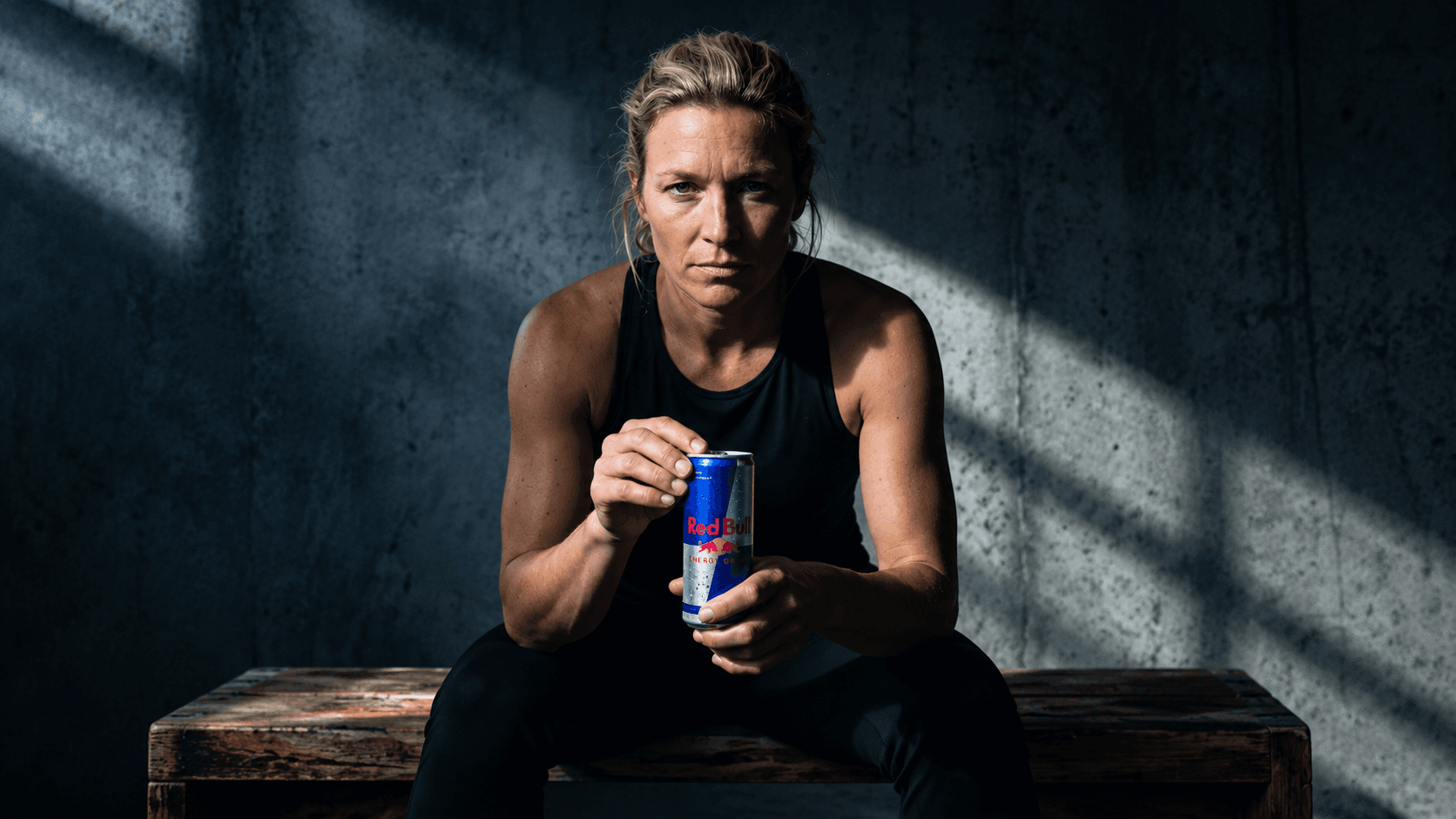
UGC beauty creatives made with Fotyra Studio.
What Makes a Beauty Product Ad Effective?
A strong beauty product ad usually answers five questions quickly:
What is it? Why does it matter? What does it do? Why should I believe it? What should I do next?
A simple creative framework is:
Hook → Problem → Product → Proof → Benefit → CTA
The hook earns attention. The problem creates relevance. The product makes the message concrete. Proof supports the claim. The benefit gives the viewer a reason to want the product. The CTA gives them a next step.
The exact sequence does not need to look identical in every ad. A makeup product may need an application demo. A serum may need a texture shot. A hair product may need a before-and-after or routine. A fragrance may need a stronger mood or lifestyle concept. The important part is that the visual and message support each other.
Beauty Ads Need Product Proof
Beauty is a claims-heavy category, so showing is often stronger than simply telling.
For skincare, proof could be a texture close-up, product application, routine, ingredient explanation, or customer experience. For makeup, it could be a swatch, shade comparison, application, or finish. For haircare, it could be the application process, styling result, or routine.
The goal is not to make every ad feel like a scientific presentation. The goal is to make the product easier to believe and easier to understand.
What Are the Best Types of Beauty Product Ads?
There is no single best beauty ad format. The right choice depends on the product, audience, platform, and campaign goal.
| Ad format | Best use | Strong visual | Good fit |
|---|---|---|---|
| UGC video | Trust and discovery | Person using product | TikTok, Reels |
| Product demo | Show how it works | Application or use | Skincare, makeup |
| Static ad | Fast product message | Product + benefit | Meta |
| Carousel | Multiple benefits or products | Step-by-step cards | Instagram, Facebook |
| Tutorial | Education | Product in a routine | TikTok, Reels, YouTube |
| Ingredient-led ad | Product education | Ingredient + product | Skincare |
| Lifestyle ad | Brand desire | Product in context | Instagram, Meta |
| Cinematic ad | Brand storytelling | Motion + product | Reels, YouTube |
UGC Beauty Ads
UGC works when the creator has something useful to say. A person simply holding a product is not enough. Strong UGC usually has a clear problem, an honest experience, a product moment, and a reason to keep watching. That could be a routine, a product reaction, an objection, a comparison, or a demonstration. UGC should be treated as a format, not as the whole strategy.
UGC beauty creatives with realistic product textures, made with Fotyra Studio.
Product Demonstration Ads
Product demonstrations are especially useful when something about the product can be seen. Show the texture. Show the application. Show the finish. Show how it fits into a routine.
This removes some of the work from the copy because the viewer can understand the product through the visual itself.
Static Beauty Ads
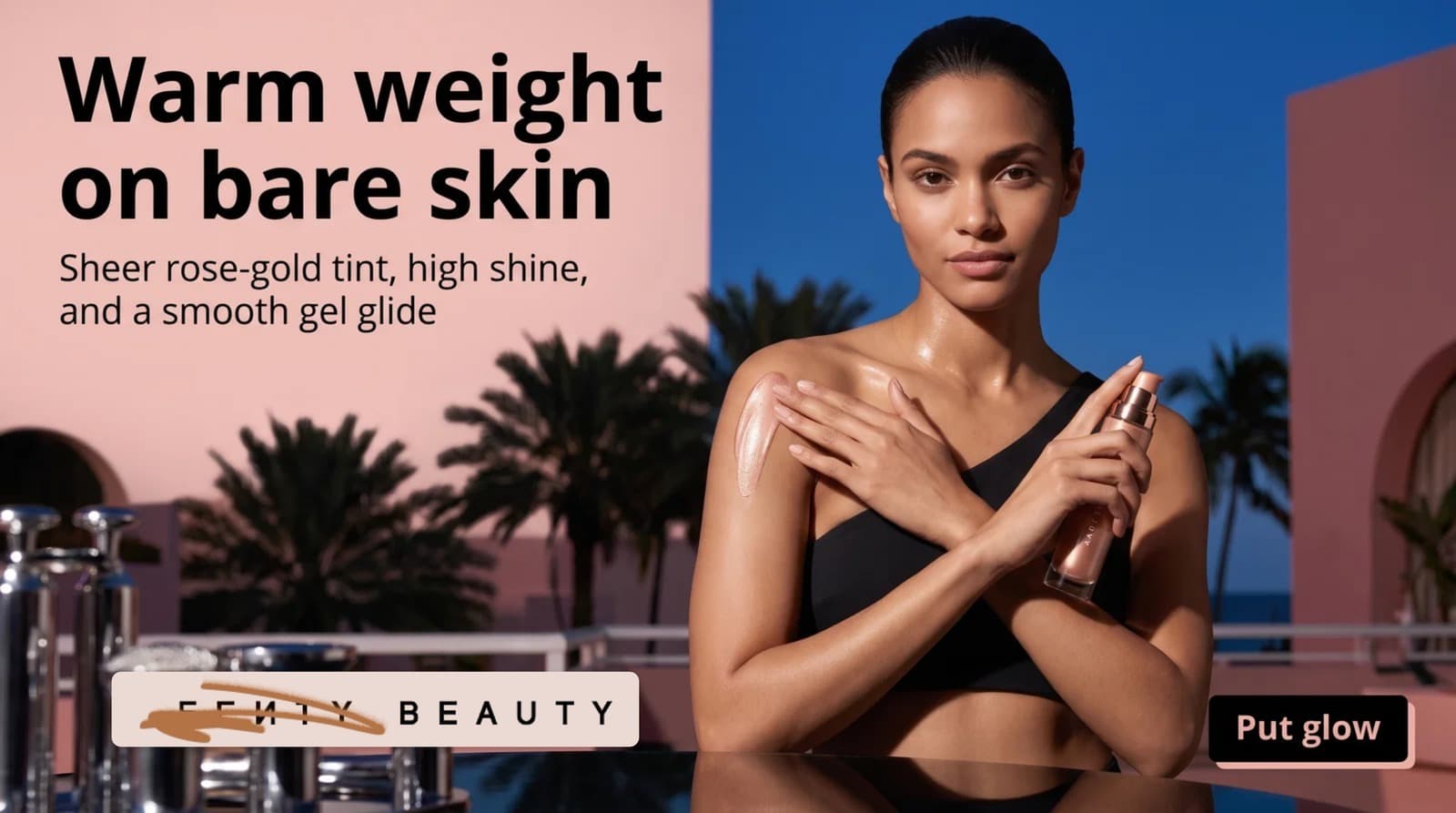
Static ads still have an important role. A strong static beauty advertisement can communicate one clear benefit, product feature, ingredient, offer, visual concept, or comparison in a single frame.
The goal is not to add more text. The goal is to make one idea easier to understand.
Static beauty creatives made with Fotyra Studio.

What Are the Best Platforms for Beauty Product Ads?
Beauty brands do not need the exact same creative everywhere.
| Platform | Main use | Formats worth testing |
|---|---|---|
| Visual discovery | Reels, Stories, carousel | |
| Reach and retargeting | Static, video, carousel | |
| TikTok | Discovery and social commerce | UGC, demos, creator content |
| YouTube | Education and demonstrations | Shorts, tutorials, reviews |
| High-intent demand | Search, Shopping | |
| Inspiration | Product pins, video |
Facebook Beauty Product Ads
Facebook can support static ads, video, carousel creative, catalog campaigns, retargeting, and offer-led messages.
A cold audience may need a simple product-benefit message. Someone who already visited the website may need proof, a comparison, a review, or a stronger reason to return.
Instagram Reels Beauty Product Ads
Reels are useful for demonstrations, routines, UGC-style content, tutorials, and visually strong product stories.
Start with the first frame. Think about the opening hook, product visibility, captions, audio, and safe placement of key text.
Do not simply resize the same asset for every placement.
TikTok Beauty Product Ads
TikTok has become an important part of beauty discovery and social commerce. TikTok’s current beauty guidance covers formats and objectives including In-Feed Ads, Spark Ads, Shop Ads, Web Conversion, creator content, and other solutions.
That means a TikTok beauty ad can do several jobs. It can introduce the product, demonstrate it, answer a question, capture search demand, or move someone toward purchase.
YouTube Beauty Ads
YouTube works well when the viewer needs more explanation. Tutorials, reviews, demonstrations, comparisons, routines, and Shorts can all support beauty product discovery.
How Do You Create Beauty Product Ads That Convert?
Start with the product and the customer problem, not the design.
Step 1: Choose One Customer Problem
One ad usually needs one main problem.
For skincare, that might be dryness, a complex routine, heavy texture, or difficulty finding the right product. For makeup, it may be shade matching, coverage, wear time, or application.
Do not try to solve every customer problem in one short ad.
Step 2: Choose One Creative Angle
The same product can support different angles.
You could use a problem-first angle, a benefit-first angle, an educational angle, a routine angle, a UGC angle, or a comparison angle.
This is why product research matters before creative production. Fotyra’s existing work on product research before creative production explains how product positioning, audience psychology, competitive information, and buying triggers can shape the creative before production begins.
Step 3: Build the Hook
A hook is the opening idea that gives someone a reason to continue.
Examples include:
“Your foundation does this by noon.”
“Here is what this texture actually looks like.”
“Three ways to use this.”
“Trying to find your shade?”
“Why does this formula feel so light?”
The best hook is often not the cleverest one. It is the one that makes the right viewer recognize a problem, desire, or question.
Step 4: Show the Product Early
Do not make the viewer wait to understand what you are selling.
Show the bottle, tube, palette, model, texture, swatch, packaging, or application early in the creative.
Step 5: Add Proof
Proof should match the message.
Use a demonstration, ingredient explanation, customer experience, product detail, swatch, review, or other appropriate evidence.
Step 6: Finish With a Clear CTA
The CTA should match the stage of the buyer.
Use simple actions such as Shop Now, See the Shades, Explore the Routine, or Learn More.
What Beauty Ad Hooks Should You Test?
Do not create one hook and assume it is the answer. Build a group of hooks around different ideas.
You can test:
Problem: “Is your skin still tight after cleansing?”
Curiosity: “Here is why this feels different.”
Benefit: “Light hydration without the heavy feel.”
Routine: “The two steps I use every morning.”
Education: “Why this ingredient is in the formula.”
Demonstration: “Watch how this applies.”
Comparison: “Light coverage or full coverage?”
The important part is to keep each hook connected to a specific angle and proof point.
How Do You Test Beauty Product Ads?
One of the biggest creative mistakes is making five versions of the same ad and treating them as five different ideas.
Changing the headline, crop, background, or color can create variations, but it does not always give you a new creative angle to test.
A better approach is to test the idea behind the ad.
A simple framework is:
Hook × Angle × Visual × Format
| Variable | Examples |
|---|---|
| Hook | Problem/curiosity/benefit |
| Angle | Education/routine/proof |
| Visual | UGC / product / lifestyle |
| Format | Static / Reel / TikTok |
For example, the same skincare product could become a problem-first ad, an ingredient-led concept, a product demonstration, a routine video, or a lifestyle creative. Each one gives you a different way to communicate the same product.
This is where Fotyra Studio can help.
Fotyra Studio is an AI-powered creative platform that lets brands create their own advertising and creative content. Brands can sign up, choose a subscription, bring in their product and brand information, and use the Studio to generate different creative concepts and variations themselves.
Instead of starting from a blank page every time, the Studio uses the product and brand context to help turn one product into multiple creative directions. That can include different hooks, visual concepts, environments, scenes, scripts, and formats.
So a beauty brand could take one serum and explore several directions:
Problem-led: Focus on a common customer pain point.
Education-led: Explain an ingredient or product benefit.
Product-led: Make the product and its visual details the hero.
UGC-style: Build a more creator-like concept around product use.
Lifestyle: Place the product into a relevant daily routine or setting.
The goal is not to create more versions just for the sake of volume.
The goal is to give your team more meaningful creative options to evaluate and test.
And because the brand creates these assets directly inside Fotyra Studio, the workflow can move from product information → creative direction → generated asset → variation → testing without treating creative production as a separate agency service.
How Many Beauty Product Ad Creatives Should You Test?
There is no universal number. The right amount depends on your budget, audience size, campaign objective, and production capacity.
A useful starting framework is:
1 product → 3 angles → 3 hooks → 2 visual directions → 2 formats
You do not need to launch every combination at once. The point is to create enough meaningful creative options to generate useful learning.
Fotyra’s existing guide on how many ecommerce ad creatives to test covers this creative-volume problem in more detail.
How Often Should You Refresh Beauty Ads?
There is no universal “refresh every seven days” rule. Instead, watch for changes in performance.
Declining CTR, rising CPA, increased frequency, weaker engagement, and newer creative consistently outperforming older creative can all point to fatigue. When that happens, changing one sentence may not be enough.
Change the concept, hook, angle, visual, format, offer, or message.
What Beauty Advertising Claims Should Brands Avoid?
Beauty advertising also needs a claims and compliance layer. The FDA says cosmetic claims must be truthful and not misleading. Certain claims about treating or preventing disease or affecting the structure or function of the body can also move a product into drug-regulation territory in the United States.
That means brands should be careful with unsupported claims such as guaranteed results, medical treatment claims, or clinical statements that cannot be supported. The safer approach is simple: make the claim fit the evidence, keep the wording clear, and show what the product actually does.
How Can Better Product Visuals Improve Beauty Ads?
The source material matters. A strong creative concept can still look weak when the product image is unclear, poorly lit, inconsistent, or disconnected from the brand. That is why beauty brands should think about product visuals before the ad is produced.
The goal is not to make every asset look expensive. The goal is to make the product look intentional, recognizable, and relevant to the creative concept.
What Tools Can You Use to Create Beauty Product Ads?
A practical beauty advertising workflow has four stages:
Research → Strategy → Production → Testing
For research, brands can use Meta Ad Library, TikTok Creative Center, Google Trends, customer reviews, Reddit, YouTube, Quora, and LinkedIn. For production, brands can use design and editing software, creator tools, and AI creative platforms.
But the tool is not the strategy. That distinction matters because faster production can also produce more generic content.
Where Fotyra Studio Fits
At Fotyra, we built around the gap between product information and creative production.
Fotyra Studio is a self-serve AI creative Studio where brands can create their own advertising and creative content. The platform uses brand and product intelligence to help turn one product into different creative directions rather than forcing every SKU into the same visual template.
Fotyra’s Brand DNA and Product DNA approach is designed to give the creative process stronger inputs before production. That can include positioning, audience information, product benefits, messaging, competitive context, and creative opportunities.
The result is not simply “AI-generated ads.”
It is a workflow for turning product intelligence into more creative options.
That approach is demonstrated in Fotyra’s AI ad campaign case study using ReVive Skincare, where the team worked through Brand DNA, Product DNA, audience intelligence, messaging guardrails, spokesmodel concepts, and multiple creative formats including static, cinematic, UGC, video, and infographic assets.
How Can AI Help With Beauty Product Ads?
AI can reduce the time needed to move from a product brief to creative concepts and variations. It can support ideation, scripting, visual development, product scenes, UGC-style concepts, video, and creative variations.
But speed alone is not an advantage if every output feels generic.
The better workflow is:
Product understanding → Creative strategy → Concept → Production → Variation → Testing
That is also why Fotyra’s existing scroll-stopping ecommerce ads with AI guide focuses on creative direction rather than treating AI as a button that replaces strategy.
Beauty Product Ads and AI Search
Beauty discovery is no longer limited to traditional search. People move between social platforms, Google, retailer websites, reviews, videos, marketplaces, and AI tools.
Tinuiti’s 2026 research found that beauty shoppers are using more than one research channel, with AI increasingly becoming part of the journey rather than replacing search and social altogether.
That creates an important content opportunity for beauty brands. Make your product information clear.
Explain what the product is.
Explain who it is for.
Explain the main benefits.
Answer common questions.
Keep product information consistent across your website and other public channels.
For AI visibility, the same principle applies to your content: give a direct answer first, then expand on it with evidence, examples, context, and useful detail.
Conclusion
The best beauty ads go beyond polished visuals. They make the product clear, build trust, and give customers a reason to act.
With Fotyra Studio, brands can turn product intelligence into creative concepts, explore different angles and formats, and create ad variations themselves, then test, learn, and iterate based on what performs.
Ready to create better beauty ads? Sign up at fotyra.com or book a demo today.
Frequently Asked Questions About Beauty Product Ads
What are beauty product ads?
Beauty product ads are paid advertisements that promote beauty products through images, video, demonstrations, creator content, offers, or product education.
What type of beauty ads work best?
There is no single winning format. UGC, product demonstrations, static ads, tutorials, creator content, short-form video, and carousels are all formats worth testing.
Are TikTok ads good for beauty products?
TikTok can be a strong channel for beauty because the platform supports creator content, demonstrations, discovery, search, and social commerce. TikTok’s beauty advertising guidance includes several objectives and formats for moving from awareness to purchase.
Should beauty brands use UGC ads?
Yes, but UGC should be treated as a format rather than a complete strategy. The concept still needs a strong hook, relevant product moment, useful proof, and clear CTA.
Are video ads better than static beauty ads?
Not automatically. The right format depends on the product, message, platform, audience, and campaign goal. Beauty brands should test both.
How should beauty brands refresh tired ads?
Refresh the underlying creative idea rather than only changing small pieces of copy. Test a new angle, hook, visual, format, message, or offer.