You already know that great Amazon product ads aren’t enough to win on Amazon anymore. What most sellers miss is that the real lever isn’t a better main image; it’s how many distinct ad angles you can put behind that one listing. In this guide, we walk through the exact static and video creative system we built for one Amazon activewear product, and the framework you can copy for your own.
Quick answer: One Amazon product can support ten or more distinct ad creatives static images and short-form video because each placement (Sponsored Products, Sponsored Brands, Sponsored Display) and buyer intent respond better to a different visual angle. Building that set, instead of reusing one image everywhere, is what we call a multi-creative ad system.
Key Takeaways
- One Amazon product supports many ad creatives. A single activewear listing can carry a full set of static images and video built for different placements and shopper intents.
- Creative diversity drives measurable performance. Brands running 4–6 active creative variants see up to a 22% higher click-through rate than brands running one or two, per AdScale’s analysis of 1,200+ ecommerce accounts.
- Static and video ads do different jobs. Static wins fast, comparison-driven decisions; video builds trust and shows the product in motion.
- Creative fatigue is a real cost. Ads reused too long lose click-through rate and push up cost-per-click as Amazon’s systems start treating them as stale.
- AI-assisted production makes this affordable. Teams can now produce dozens of on-brand variations from one shoot instead of commissioning a new shoot per angle.
- Testing more than one creative per product is now the baseline. Sellers stopping at a single hero image are competing against brands running full creative systems.
What Is a Multi-Creative Ad System for Amazon Products?
Amazon product ads are the paid placements Sponsored Products, Sponsored Brands, and Sponsored Display that put a listing in front of shoppers, and each runs on a different creative format. Sponsored Products are also called sponsored product ads or Amazon PPC ads, since sellers pay per click; Sponsored Display produces Amazon product display ads, the in-context images that follow shoppers to other product pages.
A multi-creative ad system is a set of static images and video ads built from one product, so each placement and each shopper intent gets a purpose-built visual, instead of one image reused everywhere. It’s the difference between one photo and a portfolio of ecommerce ad creatives built from the same product.
For example, a legging listing might use a clean shot for its Sponsored Products Amazon campaign, a fit-comparison graphic for size-conscious shoppers, and a short workout video for Sponsored Brands three jobs, one product.

Why Does One Amazon Listing Need Multiple Ad Creatives?
One Amazon listing needs multiple ad creatives because a single image can’t perform well across every placement, audience, and stage of the buying journey at once. What is Amazon advertising, at its core, if not a bid for a shopper’s attention, and each format scores ads on relevance and engagement, not price alone? Creative quality moves the needle for Amazon advertising for sellers as much as bidding does.
First, creative fatigue quietly kills performance: the same asset shown repeatedly starts losing click-through rate, no matter how well an Amazon advertising campaign was built at launch.
Second, creative accounts for a large share of campaign results, not just targeting. Amazon’s own reported testing found AI-generated lifestyle images achieved 40% higher click-through rates than standard product photos. A single static image is a starting point, not a finished strategy.
How We Built a Multi-Creative System for One Amazon Activewear Product
Step 1: Mapping the Product to Amazon’s Placements
Sponsored Products needs a comparison-ready main image; Sponsored Brands rewards a short lifestyle video; Sponsored Display needs in-context lifestyle photography. For this activewear product, that meant planning 4 static concepts and 2 video concepts upfront, so every asset had one placement and one job.
Step 2: Producing the Static Creative Set
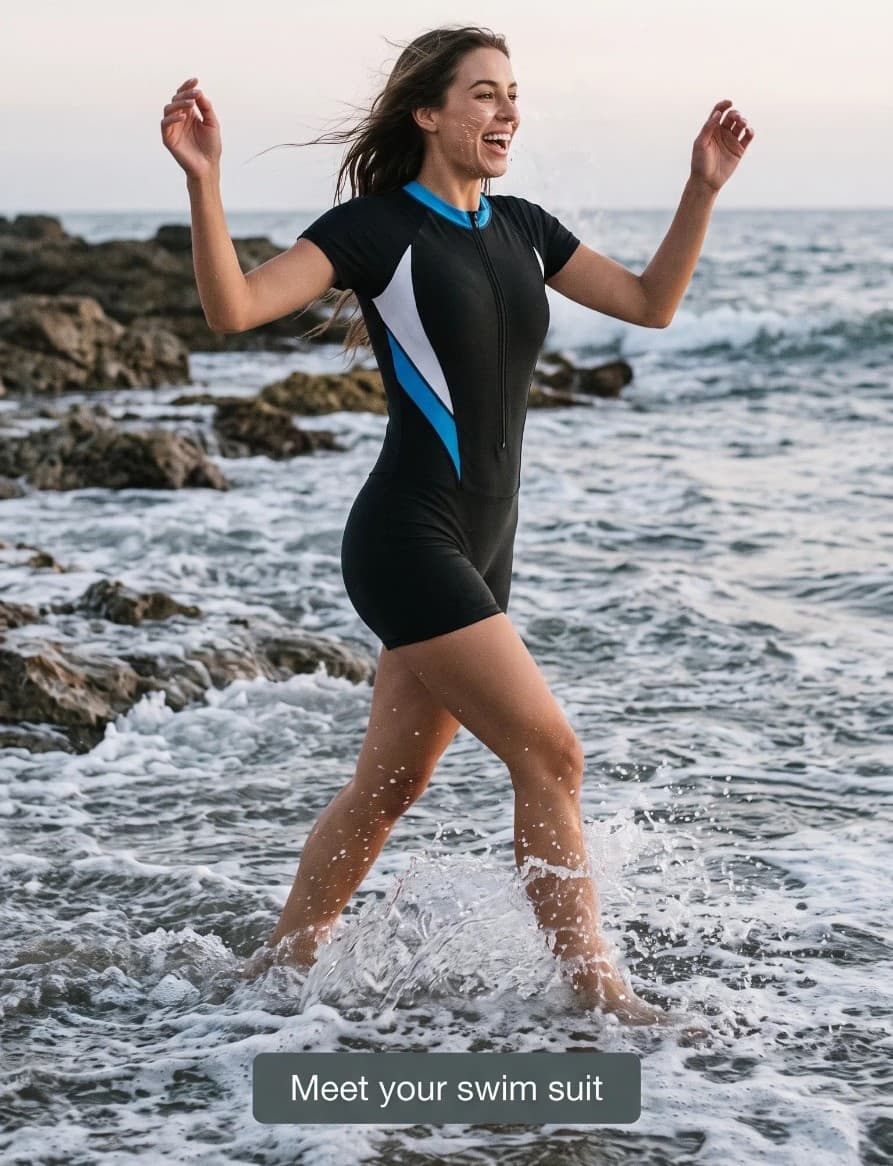
Our static set included a clean hero shot, a fit/size comparison graphic, a fabric close-up, and a lifestyle shot in motion, each answering a different buyer question instead of repeating the same angle. This mirrors how AI helps produce 50 ad variations faster from one shoot.


Step 3: Producing the Video Creative Set
The video set covered a short Sponsored Brands clip for scroll-speed attention, a UGC-style demo of fabric stretch, and a longer video built around a real workout scene. Building AI video ads from existing photography, instead of a new shoot, is what keeps a set like this affordable.
Step 4: Testing and Refreshing the Set
We track click-through and add-to-cart rate by individual creative, not just by campaign. Static images get swapped roughly every two weeks; video runs longer, since it costs more to produce and fatigues more slowly. Our creative testing framework covers exactly how we decide when to retire a creative.
Amazon Ad Types: Static vs. Video: Which Wins Which Job?
Neither format “wins” outright; they cover different stages of the buyer journey, the core idea behind static vs. AI video ad performance.
| Dimension | Static Image Ads | Video Ads |
|---|---|---|
| Best Amazon placement | Sponsored Products (PPC ads), Sponsored Display (product display ads) | Sponsored Brands Video |
| Production speed | Fastest hours per concept | Slower: a day or more per concept |
| Buyer stage it wins | Comparison shopping, quick decisions | Consideration, trust-building |
| Cost per asset | Lowest | Higher, unless built from existing photography |
| Shopper signal it sends | Clear feature/spec comparison | Product-in-motion, real-use proof |
Which Tools Can You Use to Build a Multi-Creative Ad System?
You can build a multi-creative system with a mix of Amazon’s own free tools and a dedicated AI production platform; the two are complementary, not competing. Amazon’s free Creative Studio and Manage Your Experiments cover basic image generation and split-testing at no extra cost.
For teams that need a full static-plus-video set from one shoot on a realistic timeline, we built Fotyra specifically to close that gap the same process behind finding winning ad angles for ecommerce products beyond Amazon.
What Should You Do Next With Your Own Listing?
Start by auditing how many active creatives your top product has today; most sellers find it’s one. From there: map your product to Amazon’s placements as in Step 1, build a small static-plus-video set instead of a single hero image, and set a testing cadence before scaling spend.
Conclusion
One product doesn’t need one ad; it needs a small, purpose-built set of static and video creatives matched to how shoppers actually move through Amazon. That’s the system we built for this activewear product, and it’s the same system we build for every brand that shows up with a single hero image and a stalled campaign.
If your top Amazon listing is still running on one photo, you don’t need to guess your way to a fix. Book a 30-minute call with Fotyra no deck, no pitch and we’ll map your product to Amazon’s placements live, the way we did in Step 1, and show you what a full creative set would look like for your listing.
Frequently Asked Questions
What Are the Different Amazon Ad Types?
The three core types are Sponsored Products (Amazon PPC ads promoting one listing), Sponsored Brands (brand-level video and header ads), and Sponsored Display (Amazon product display ads that follow shoppers to other pages).
How Many Ad Creatives Does One Amazon Product Need?
Most products benefit from at least 4–6 active creatives split across static and video, matched to specific placements; more than that dilutes your testing data instead of helping.
How Often Should You Refresh Amazon Ad Creatives?
Static images typically need refreshing every few weeks once click-through rate starts dropping; video can run longer before fatigue sets in.
Can AI Really Replace a Full Photoshoot for Amazon Ads?
AI-assisted production turns one product shoot into many static and video variations, but it works best alongside, not instead of,f solid original photography.