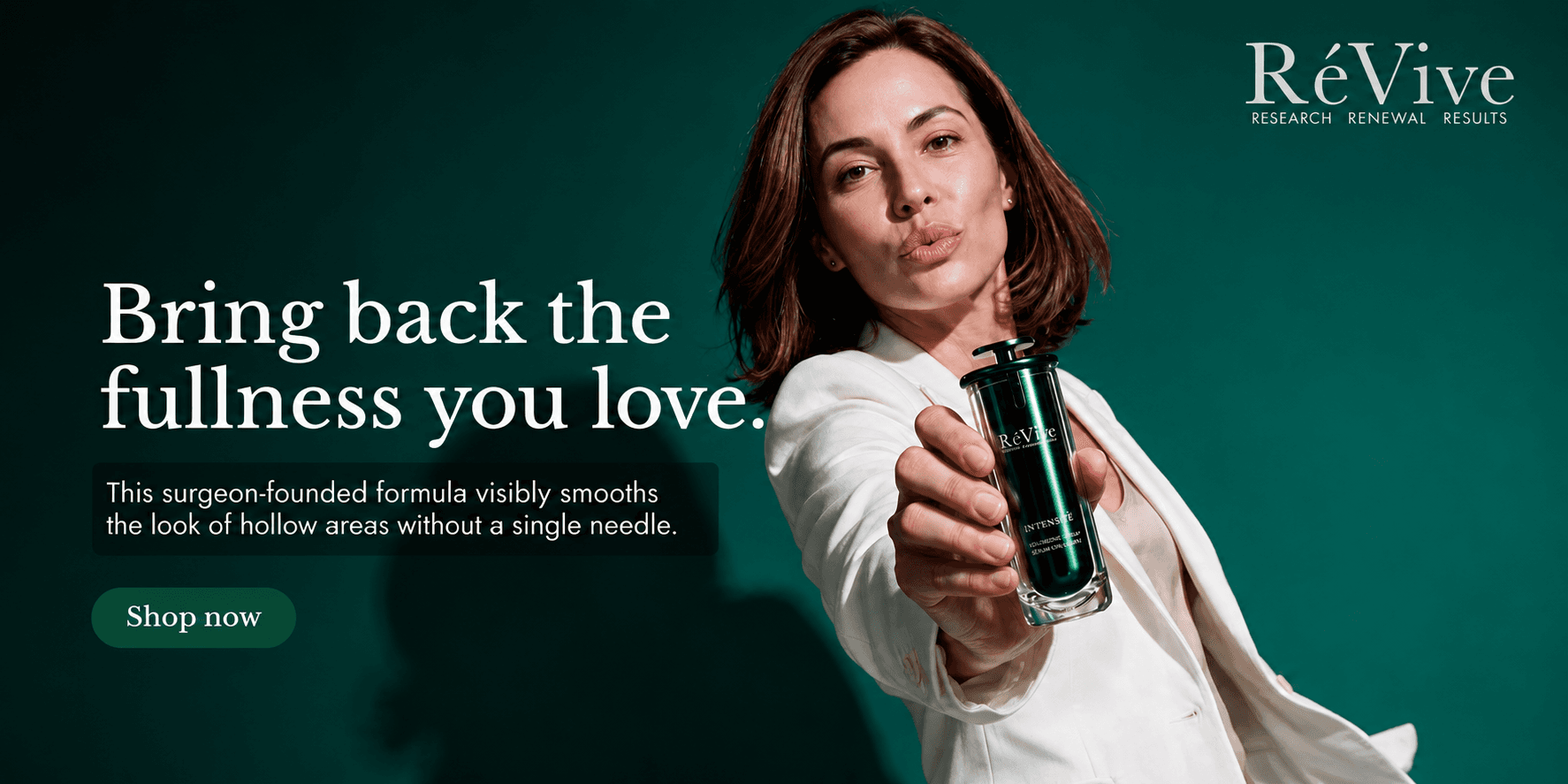
We used ReVive Skincare as a real-world test case inside Fotyra Studio to show how brands can create on-brand advertising themselves. Using public brand and product information, Fotyra generated Brand DNA, Product DNA, and multiple ad formats in minutes without an agency or production team. The result shows how brands can create, test, and scale ad creative independently inside Fotyra Studio, with onboarding support available when needed.
AI Ad Campaign Case Study: Why ReVive Skincare
Most AI creative agency case study demos pick an easy target: a generic DTC brand with loud, simple messaging. We wanted a harder test.
ReVive Skincare is a prestige, science-driven, surgeon-founded anti-aging brand with clinical claims, a specific affluent audience, and a tone that’s deliberately calm and composed rather than hyped. That’s a much harder brief for AI to get right than “make it look cool.” If a tool can capture this level of nuance in audience psychology, regulatory-safe claims language, and clinical tone, it can handle almost any category.
So the question we set out to answer: can an AI ad campaign tool understand a prestige brand well enough to produce a full, on-brand creative system without a single human strategist in the room?
Why This Matters
Most AI-generated creative fails for the same reason. It starts with production instead of strategy.
Traditional creative workflows can take weeks of research and production before a brand gets its first campaign assets. Many AI tools also skip the strategic context needed to create consistent, on-brand advertising.
Fotyra Studio brings this workflow into one self-serve AI creative platform. Inside the Studio, users can build a structured understanding of their business, products, audience, and messaging before creating their ads.
Step 1: Brand DNA: Deep Research, Not a Design Guess
Before creating ads, users can build a structured Brand DNA profile inside Fotyra Studio, mapping positioning, tone, and identity into a single creative foundation.
“For discerning individuals seeking clinical-grade anti-aging results, ReVive Skincare is the science-driven, prestige beauty brand that restores the skin’s youthful glow and volume because it is founded on the proprietary, Nobel-inspired RVGF Technology developed by a board-certified plastic surgeon.”

The snapshot captures ReVive’s full identity at a glance: positioning, voice and tone, brand colors, typography, and active channels. The Brand DNA profile becomes the creative foundation users can apply across the ads they create in the Studio, helping keep the output consistent and on-brand. More on why this research step matters: why product research matters before creative production.
Step 2: Product DNA: Every SKU Researched, Not Briefed
Brand-level understanding isn’t enough; a campaign has to sell specific products. Fotyra Studio turns product information into structured Product DNA that users can apply when creating product-specific advertising.

For the flagship serum ($620), the Product DNA identified the top benefit (instantly plumps hollow areas), the primary use case (nasolabial folds and marionette lines), and the core proof point (founded by a board-certified plastic surgeon). This ran across 7 products spanning $75–$1,600, meaning every ad and every claim is grounded in the actual product, not generic beauty copy.
Step 3: Audience Intelligence: Who’s Actually Buying
Before writing a single hook, users can use Fotyra Studio to turn audience and brand information into structured audience insights, including pain points and buying triggers.

The audience profile identified an affluent, results-driven audience (women 40–65+) whose top pain points are visible skin aging and loss of skin volume, and whose top buying trigger is a plastic surgeon endorsement over anything else. This becomes the emotional and rational hooks used in every ad that follows. Related: why buying triggers matter more than product features.
Step 4: Messaging Guardrails: Where Most Tools Fall Short
This is usually where content drifts on-topic but off-brand. Users can create messaging guardrails inside Fotyra Studio alongside their creative direction.

Pillars for ReVive AI ad campaign: Clinical Expertise, Proprietary RVGF Technology, Cellular Regeneration. Claims kept off-limits: implying surgery is unnecessary at any age, unsubstantiated instant-results promises, and positioning for teenage or acne-prone skin. These guardrails help users keep generated creative aligned with the brand’s messaging and predefined claims boundaries.
One important note on headlines: nothing here locks to a single line. Fotyra Studio produces multiple headline variations per campaign, testing different hooks and angles (emotional, clinical-proof, aspirational) while every variation stays inside these same guardrails.
Step 5: Spokesmodels: Faces Built Without a Casting Call
With the brand profile established, users can generate AI spokesmodel personas inside Fotyra Studio calibrated to ReVive’s tone, audience, and aesthetic.

Three persona types anchor the roster: “The Aspirational Expert,” “The Aspirational Figure,” and “The Clinical Expert.” These personas can be reused across products and creative variations without a new casting process. Logistics: each model can be reused across every product in the catalog while staying visually and tonally consistent.
Step 6: Static Ad Creatives
Using the Product DNA and messaging guardrails above, users can generate static ad variations inside Fotyra Studio built for Meta feed, Google Display, and e-commerce placements,s each one anchored to a specific product benefit and proof point (e.g., the RVGF Technology claim for the Intensité Volumizing Serum, the surgeon-founder story as a trust hook).


Step 7: Cinematic Ad
Using the Voice Profile generated inside Fotyra Studio, users can create cinematic ads aligned with the brand’s tone and visual direction.
Step 8: UGC-Style Ads
Skincare converts on trust and visible results, so users can create AI UGC-style ad concepts around the audience’s top buying trigger: visible clinical results.
Step 9: Video Ads — Product Demos & Short-Form Variations
Users can also create additional short-form variations for paid social testing, each built around a different pain point (under-eye fatigue, loss of volume, ineffective generic skincare) to support creative testing at the ad-set level.
Step 10: Infographic — The Brand DNA, Visualized
The audience pain-point data and messaging pillars were translated into a single shareable infographic — a format suited for PR, investor decks, or social proof rather than paid media.


The Full Kit: Side-by-Side Breakdown
| Deliverable | What Fotyra Generated | Traditional Equivalent | Traditional Timeline | Fotyra Timeline |
|---|---|---|---|---|
| Brand DNA | Positioning, voice profile, colors, typography, competitors | Brand strategy workshop + brand book | 2–4 weeks | Minutes |
| Product DNA | Benefits, features, differentiators, use cases per SKU | Product marketing brief per SKU | 1–2 weeks per product | Minutes per product |
| Audience Intelligence | Pain points, buying triggers, primary/secondary audience | Market research study | 3–6 weeks | Minutes |
| Messaging Guardrails | Words to use/avoid, claims to avoid, pillars | Messaging framework doc | 1–2 weeks | Minutes |
| AI Spokesmodels | On-brand persona roster, reusable across products | Casting + photoshoot | 2–4 weeks | Minutes |
| Static Ads | Platform-ready creative variations | Studio photoshoot + retouching | 2–3 weeks | Minutes |
| Cinematic Ad | Fully edited, color-graded spot | TV-style commercial shoot | 4–12 weeks | Minutes |
| UGC Ads | Testimonial-style short-form video | Creator sourcing + production | 2–4 weeks | Minutes |
| Video Ads | Multiple short-form variations | Reshoots per variation | 1–2 weeks per cut | Minutes |
| Infographic | Shareable brand summary asset | Design agency deliverable | 1 week | Minutes |
Total: a full strategic and creative system, built in days instead of months. Per Fotyra’s pricing page, plans typically deliver in 3–7 days at up to 90% lower cost than traditional production.
Traditional Creative Workflow vs. AI Creative Workflow
| Traditional Workflow | Fotyra Workflow |
|---|---|
| Brand workshops | Automated Brand DNA |
| Product briefs | Product DNA |
| Customer research | Audience Intelligence |
| Messaging framework | AI Messaging Guardrails |
| Casting & production | AI Spokesmodels |
| Creative production | Campaign-ready assets |
What This Proves
AI Creative Quality Depends on Strategic Understanding
The quality of AI-generated advertising is determined long before the first image is created. When users establish Brand DNA, Product DNA, audience insights, and messaging guardrails first, the creative they generate becomes more relevant, consistent, and easier to scale.
Strategy Becomes Reusable
Rather than rebuilding the creative foundation every time, users can reuse Brand DNA, Product DNA, audience insights, and messaging inputs across new ads and products.
Faster Production Doesn’t Require Less Strategy
Instead of requiring a separate strategy and production process, Fotyra brings these capabilities into the Studio so brands can handle more of the creative workflow themselves.
Key Takeaways for Skincare & Ecommerce Brands Considering AI Creative Production
- AI creative quality depends on brand understanding, not just generation power. Tools that skip Brand DNA and Product DNA produce generic output regardless of model quality.
- Guardrails matter more in regulated or claims-sensitive categories. Skincare, medical, and finance brands need explicit “claims to avoid” logic, not just style guides.
- Reusable spokesmodels change the economics of testing. One persona can support dozens of creative variations without new casting or shoot costs.
- Speed compounds. Faster strategy-to-asset timelines mean more creative iterations tested per quarter, not just cheaper production.
- Fotyra is built as a self-serve creative workflow, giving brands the tools to create and iterate on advertising themselves, with onboarding support available when needed.
Lessons for Ecommerce Brands
This ReVive demonstration shows how an AI creative platform can bring more of the advertising workflow directly into the hands of brands. The strongest results come when creative generation has access to structured brand, product, audience, and messaging context.
That means teams can move from understanding the product to creating multiple advertising concepts without waiting for a traditional production cycle. The result is a more flexible creative workflow where brands can create, test, and refresh their own advertising at a much faster pace.
Conclusion
This AI ad campaign demonstration shows what becomes possible when the creative workflow is built directly into an AI platform. Using Fotyra Studio, brands can turn their existing brand and product information into structured creative intelligence and use that foundation to create static ads, video ads, UGC-style creative, cinematic concepts, spokesmodels, and more, all inside the same Studio.
The goal is simple: give brands the ability to create more advertising themselves, faster, without needing a production agency for every creative request. And when a team needs help getting started, Fotyra can provide onboarding and guidance to help them make the most of the Studio.
See what your team can build inside Fotyra Studio. Create product ads, UGC-style videos, cinematic creative, static ads, and more in minutes using your own brand and product information.
Explore Fotyra Studio · View FAQ
Need help getting started? Fotyra also provides onboarding support to help your team set up and use the Studio.
Frequently Asked Questions
What’s included when I use Fotyra Studio?
Fotyra Studio gives teams access to an AI-powered creative workflow for building Brand DNA, Product DNA, audience insights, messaging guardrails, AI spokesmodels, and advertising creative. The exact capabilities and usage limits depend on the plan.
Does Fotyra create the ads for me?
Fotyra is designed as a self-serve AI creative platform. Users create their own ads and creative inside the Studio rather than relying on Fotyra as an external production agency. Fotyra provides onboarding and product guidance when help is needed.
Do I need a strategy team or production team to use Fotyra?
No. The Studio is designed to let brands and marketing teams handle more of the creative workflow themselves, from brand and product context through creative generation and iteration.
How do I get started?
Choose a Fotyra Studio plan and start creating inside the platform. Teams can also use Fotyra’s onboarding support to get familiar with the workflow.
Disclaimer: “The AI creative platform can analyze and turn public brand and product information into structured creative inputs and advertising concepts.”