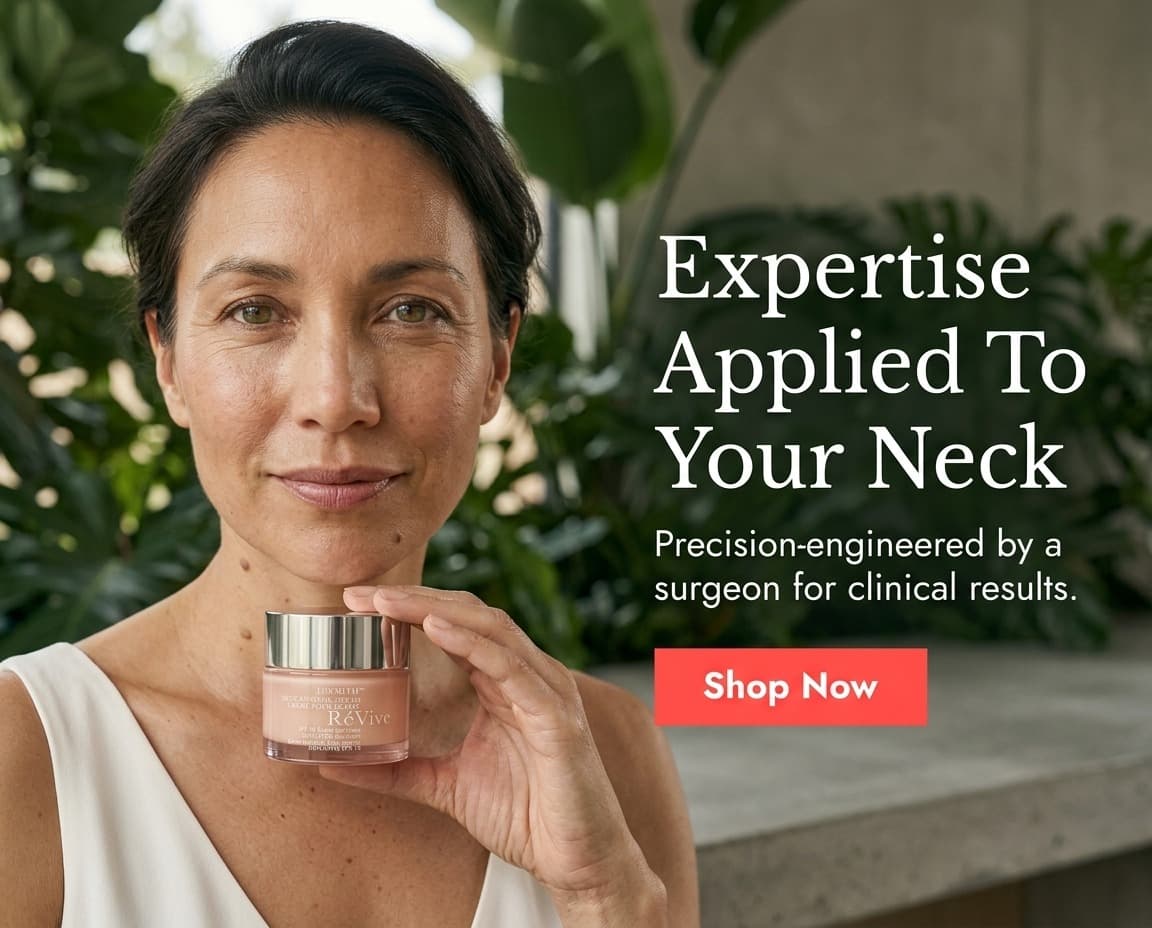
To create skincare ads that convert, start with one clear audience problem, build a strong hook around it, show the product in use, explain one specific benefit, add credible proof, and finish with a clear CTA. Then test multiple creative angles rather than relying on one ad.
This guide walks through that process end-to-end: research, angles, hooks, structure, copy, UGC, AI production, platform execution, testing, metrics, and compliance, and how to turn it into a repeatable system rather than a one-off campaign.
What makes skincare ads convert?
A beautiful skincare advertisement can earn attention without generating a single sale. Conversion isn’t a visuals problem — it’s a sequencing problem. Every ad that converts moves a viewer through the same five stages:
Attention → Relevance → Trust → Desire → Action
| Element | What it does | Example |
|---|---|---|
| Hook | Stops the scroll | “Your skincare routine may be missing this.” |
| Problem | Creates relevance | “Dry skin after cleansing?” |
| Product | Shows the solution | Serum application |
| Benefit | Explains value | Lightweight hydration |
| Proof | Builds trust | Reviews, testing, ingredients |
| CTA | Encourages action | “Shop the serum” |
Miss any one of these and the ad leaks viewers at that exact stage, which is also how you’ll diagnose underperforming ads later in this guide.

Before you create an ad, know your customer.
Most skincare ads fail before a single frame is shot: they’re built around the product, not the customer’s problem.
Define one customer problem
Pick a single concern per ad rather than trying to cover everything:
- Dryness
- Dull-looking skin
- Uneven-looking tone
- Lack of hydration
- Sensitive-feeling skin
- Overly complex routines
- Desire for simpler routines
Keep the language as a consumer concern, not a medical claim; more on this in the compliance section below.
Turn customer language into ad angle.s
Real customer language from reviews, DMs, and support tickets converts better than brand language, because it mirrors how your buyer already talks about the problem.
| Customer says | Ad angle |
|---|---|
| “My skin feels tight after cleansing.” | Hydration |
| “I don’t have time for 7 steps.” | Simple routine |
| “I hate heavy creams.” | Lightweight texture |
| “I never know what to use first.” | Routine education |
Choose the right creative angle
One product supports many angles. Testing different angles, not just different edits of the same idea, is what actually moves performance.
| Angle | Example hook |
|---|---|
| Problem-first | “Dry skin ruining your makeup?” |
| Product benefit | “A lightweight serum for everyday hydration.” |
| Ingredient | “Why this formula uses niacinamide.” |
| Routine | “The 3-step routine I actually stick to.” |
| Education | “What your skin barrier actually needs.” |
| Founder | “Why we created this formula.” |
| UGC / testimonial | “I added this to my morning routine for a week.” |
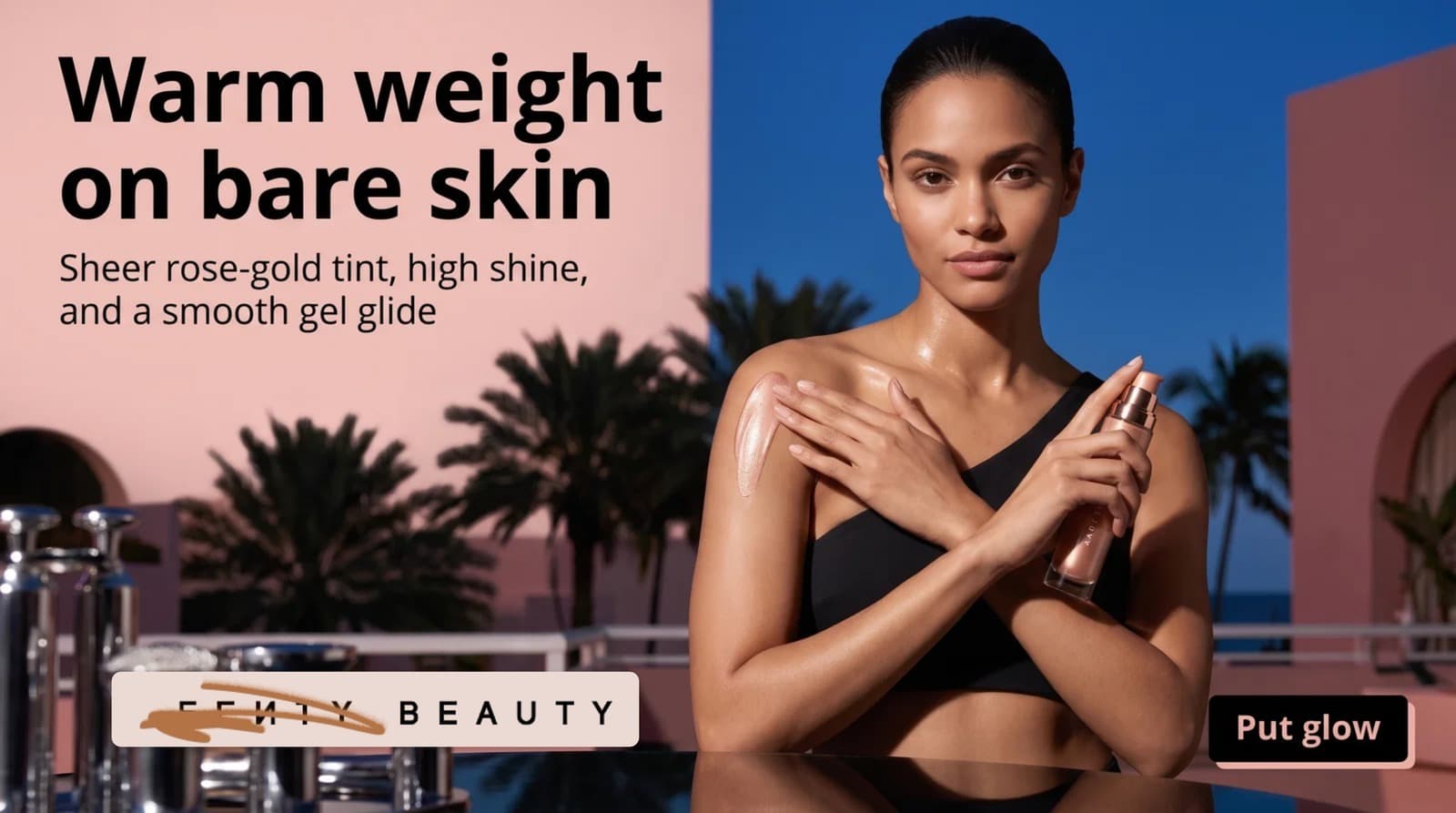
| Texture / sensory | Close-up of application, absorption, finish |
| Offer | “Your routine, now in one bundle.” |
Don’t just test different videos of the same angle. Test different ideas.
How to write a skincare ad hook that stops the scroll
A skincare ad hook should make the right person think, “That’s me.”
| Hook type | Example |
|---|---|
| Problem | “Struggling with dry-looking skin?” |
| Question | “Is your routine doing too much?” |
| Curiosity | “Here’s why we changed this formula.” |
| Routine | “The two products I use every morning.” |
| Ingredient | “Why we chose niacinamide.” |
| Founder | “We made this because…” |
| Testimonial | “I didn’t expect this texture.” |
| Myth | “More skincare steps don’t always mean better.” |
| Demonstration | “Watch how this serum applies.” |
| Comparison | “Heavy cream vs. lightweight hydration.” |
The first three seconds decide whether the rest of the ad gets watched:
- 0–1 sec — visual interruption (texture macro, product application)
- 1–2 sec — the problem or hook, stated in one line
- 2–3 sec — the product or benefit, shown, not just described
How to structure a skincare ad
This is the framework everything above feeds into:
Hook → Problem → Product → Proof → Benefit → CTA
| Stage | Example |
|---|---|
| Hook | “Your 7-step routine may be unnecessary.” |
| Problem | “Too many products can make routines hard to follow.” |
| Product | Show cleanser + serum + moisturizer |
| Proof | Review or ingredient explanation |
| Benefit | A simple daily routine |
| CTA | “Build your routine” |
Ad copy should follow the same logic: Problem + Benefit + Proof + CTA.
Dry skin after cleansing? Meet a lightweight moisturizer designed for everyday hydration. See how it fits into a simple 3-step routine. Shop the routine →
UGC skincare ads: what makes them work
UGC-style ads outperform polished commercials for skincare specifically because they read as a real person’s experience, not a pitch. The elements that matter:
- A realistic setting
- Creator-style delivery, not a script read aloud
- The product actually being demonstrated
- One specific problem, stated early
- Natural language, not brand-speak
A simple structure to script from: Hook → Problem → Product → Experience → Proof → CTA. For example: “Here’s what changed in my morning routine… I wanted something lightweight, so I started using [product]. The texture feels — here’s what I like about it. Check it out here.”
Where AI fits into skincare ad production
AI should increase creative velocity, not replace creative strategy. Concretely, that means using AI for ideation, hook and script variations, storyboards, product visuals, UGC-style creative, voiceover, editing, resizing, and localization while a human still owns the angle, the offer, and the proof.
This is also where the production bottleneck actually breaks for most skincare brands: not a shortage of ideas, but a shortage of finished creative.
How to test skincare ads systematically
“Make an ad and see if it works” isn’t a strategy. A testing system isolates one variable at a time across four levels:
- Hook — run 5 hook variants against the same ad
- Angle — problem, benefit, education, UGC, founder
- Visual — UGC, product demo, studio, texture, lifestyle
- CTA — “Shop now,” “Learn more,” “Explore,” “Try it,” “Build your routine”
Control → new hook → new angle → new visual → new CTA — change one at a time. Changing everything at once makes it impossible to know which change actually moved performance.
| Creative | Hook | Angle | Format | CTA |
|---|---|---|---|---|
| A | Problem | Hydration | UGC | Shop |
| B | Question | Education | Product demo | Learn |
| C | Founder | Brand story | Talking head | Explore |
| D | Ingredient | Education | Static | Learn |
| E | Routine | Convenience | Reel | Shop |
The goal isn’t 100 random ads; it’s finding the winning creative patterns, then producing more of what already works.
Metrics that tell you what’s actually wrong
Don’t just watch ROAS. Read the funnel:
| Metric | What it tells you |
|---|---|
| Hook / 3-sec view rate | Is the opening working? |
| Thumb-stop / hold rate | Is the creative holding attention? |
| CTR | Is the ad generating interest? |
| CPC | Cost of traffic |
| Add-to-cart rate | Product/offer interest |
| Conversion rate | Landing page + offer effectiveness |
| CPA / CAC | Cost of acquiring a customer |
| ROAS | Revenue efficiency |
| AOV | Value per order |
| MER | Overall marketing efficiency |
Use the pattern to diagnose, not just report:
- High impressions, low CTR → hook or creative problem
- Good CTR, low add-to-cart → product page, offer, or message mismatch
- Good add-to-cart, low purchases → checkout, price, trust, or shipping
- Good purchases, poor ROAS → CPA or AOV economics, not creative
Skincare advertising compliance: what you can and can’t claim
Compliance is where skincare ads differ most from other product categories, and it’s worth getting right before you scale spend.
Avoid unsupported claims such as “cures acne,” “removes wrinkles,” “guaranteed results,” “works for everyone,” or “clinically proven” without evidence to back it. Safer framing: “designed for…,” “helps support…,” “formulated with…,” “made for…” — matched to what the product can actually substantiate.
Google Ad policies require advertisers to give users the information they need to make informed decisions. Specifically prohibits medical claims and exaggerated performance promises, including claims to cure or remove acne, wrinkles, or hair loss. Platform policies and regulations vary by country and product category, so verify current guidelines before publishing, rather than relying on general guidance like this.
Common mistakes to avoid
- Making the ad too polished for the platform it runs on
- Talking about the brand instead of the customer’s problem
- A weak or slow first three seconds
- Stacking too many claims into one ad
- No product demonstration
- No proof
- No clear CTA
- Testing only one creative
- Copying competitors instead of finding your own angle
- Running the same creative long after performance drops
- Generating AI visuals without a strategy behind them
- Ignoring the landing page the ad sends traffic to
Create Skincare Ads With Fotyra Studio
Skincare brands don’t usually have a creative problem; they have a creative volume problem. One polished ad is rarely enough for a real testing strategy. Brands need multiple angles, formats, hooks, and variations without building a full production team for every campaign.
Fotyra Studio helps solve that problem by turning your brand and product information into a scalable creative system. Instead of starting from scratch for every ad, you can establish your Brand DNA and Product DNA so your creative stays aligned with your brand identity, product details, messaging, and visual direction.
With Fotyra Studio, brands can move from one product and one ad to multiple creative concepts designed for testing. Generate AI skincare ad creative, UGC-style ads, product-focused visuals, product videos, and creative variations for different audiences, hooks, and campaign angles, all while keeping the product and brand consistent.
From Strategy to Ad Creative
Fotyra Studio brings the creative workflow together:
Brand DNA → Product DNA → Creative Strategy → Ad Concepts → Scripts → AI Production → Creative Variations → Review → Testing
This means you can build different creative directions around the same skincare product, such as:
- UGC-style skincare ads for authentic, creator-led storytelling
- Product-focused ads that highlight packaging, texture, and application
- Problem-solution creatives built around specific customer needs
- Ingredient-led ads for educational campaigns
- Routine-based ads showing how a product fits into everyday skincare
- Multiple hooks and formats to give your testing strategy more options
Instead of creating one “perfect” ad, Fotyra Studio helps you create a portfolio of creatives built to be tested, learned from, and improved.
See How Fotyra Studio Works in Practice
Want to see how this creative workflow comes together in a real campaign?
Read our detailed AI ad campaign case study to see how Fotyra Studio approaches creative strategy, production, and ad variation from start to finish for skincare ads.
Final takeaway
Great skincare advertising isn’t about making the prettiest ad. It’s about creating the right message for the right customer, showing the product clearly, building trust, and testing enough creative variations to discover what actually works.
Research → Angle → Hook → Visual → Proof → CTA → Test → Learn → Scale.
Ready to Scale Your Skincare Ad Creative? See how Fotyra Studio can help you turn one product into multiple ad concepts, formats, and creative variations built for testing.
👉 Book a Call With the Fotyra Team
FAQ
How do I create skincare ads that convert?
Start with one customer problem, build a hook around it, show the product in use, explain one benefit, add proof, and close with a clear CTA; then test multiple angles and formats rather than relying on a single ad.
How do I advertise my skincare products?
Identify your customer’s core problem, pick one creative angle at a time (problem, ingredient, routine, UGC, etc.), produce it across at least one video and one static format, and run it on the platform where your audience already spends time.
How do you create a conversion ad?
Follow the Hook → Problem → Product → Proof → Benefit → CTA structure, and make sure the landing page continues the same message the ad opened with.
How do I write skincare ad copy that converts?
Use the formula Problem + Benefit + Proof + CTA, written in the customer’s own language rather than brand language.
How do I create skincare ads for TikTok?
Lead with the hook in the first second, shoot vertical 9:16, use creator-native framing and captions, and show the product early rather than only describing it. See the full TikTok breakdown linked above.
Can I create skincare ads for free?
Yes, using your own product footage, AI tools like ChatGPT for hooks and scripts, Canva for static ads, and CapCut for editing. Free tools can produce an ad; they don’t guarantee conversion without testing.
What should a skincare advertisement include?
A hook, a stated problem, a visible product, one clear benefit, credible proof, and a CTA the same six elements the core framework above is built on.
What makes a skincare product advertisement effective?
It moves the viewer through attention, relevance, trust, desire, and action, rather than just looking polished.
Are UGC ads good for skincare brands?
Yes, UGC-style ads tend to build trust faster than polished commercials for skincare specifically, because they read as a real person’s experience rather than a pitch.
Can AI create skincare advertisements?
AI can generate hooks, scripts, visuals, UGC-style creative, and voiceover — but it works best at increasing creative velocity around a strategy a person still owns, not replacing that strategy.
What is the 4-2-4 skincare rule?
It’s a skincare cleansing routine term, not an advertising framework; don’t confuse it with the Hook → Problem → Product → Proof → Benefit → CTA structure used for skincare ads.
What skincare claims should I avoid in ads?
Avoid unsupported claims like “cures acne,” “removes wrinkles,” or “guaranteed results.” Use substantiated framing like “designed for” or “helps support,” and check current platform and regional advertising policies before publishing.