Brand DNA is the fixed set of values, voice, personality, positioning, and visual traits that makes a brand recognizable across every channel and format. For AI creative production, it becomes more than a branding concept: it gives the system a structured understanding of what the brand should look, sound, and feel like before creative generation begins.
TL;DR: Brand DNA is the combination of a brand’s positioning, values, personality, voice, messaging, and visual identity that makes it recognizable and consistent. For AI creative production, Brand DNA gives AI a structured understanding of what a brand should look, sound, and feel like before creative generation begins. Instead of creating every asset from a blank prompt, brands can use Brand DNA to produce more creative variations while maintaining a consistent brand identity.
Key Takeaways
Brand DNA defines the core traits that make a brand recognizable and consistent.
It connects traditional branding concepts such as positioning, values, voice, and visual identity.
A style guide is usually written for humans; Brand DNA can be structured so AI systems can apply brand rules repeatedly.
Generic AI generation often creates visual variation without enough brand context, which can lead to inconsistent creative.
For ecommerce brands, Brand DNA becomes especially important when producing multiple products, formats, markets, and ad variations.
At Fotyra, Brand DNA is created before creative production and helps guide the direction of the assets produced afterward.
What Is Brand DNA?
Brand DNA is the core combination of positioning, values, personality, voice, and visual characteristics that makes a brand distinct and recognizable.
Think of it as the internal logic behind a brand’s creative decisions.
A premium skincare company, for example, might use restrained language, clinical credibility, sophisticated photography, and a minimal visual system. A youth-focused fashion brand may use more expressive language, energetic imagery, bold styling, and fast-moving social formats.
The individual assets change. The underlying identity does not. That distinction becomes increasingly important as brands use AI to produce more creative, faster.
Why Brand DNA Matters for AI-Generated Creative
Brand DNA matters because more creative does not automatically mean more consistent creative.
When a brand produces one campaign through a traditional creative team, people naturally carry context from one asset to the next. They know which colors feel right, which claims sound too aggressive, which visual references fit the positioning, and which ideas simply do not feel like the brand.
AI does not automatically have that context.As AI-generated creative scales, that missing context can become a much bigger production problem.
Without a clear brand framework, every generation can become another interpretation. One product image may feel premium. The next may feel generic. A UGC ad may sound conversational while a static ad suddenly sounds corporate.
This is the problem behind what many teams describe as AI sameness: technically polished creative that lacks a distinctive brand point of view. The answer is not simply better prompting. It is better brand context upstream.
Brand DNA vs. Brand Identity vs. a Style Guide
These terms overlap, but they are not interchangeable.
A useful way to think about it is simple:
Brand identity describes what the brand is. A style guide explains how to represent it. Brand DNA organizes the underlying logic so that the same identity can be carried consistently into repeated creative production.
The Core Components of Brand DNA
1. Positioning
Positioning explains where the brand sits in the market and why customers should choose it.
A luxury beauty brand and a mass-market beauty brand may sell similar products, but their creative should communicate very different value propositions.
2. Values and Personality
Values define what the brand stands for. Personality defines how those values feel in communication.
A brand can be confident without being aggressive, premium without being cold, or playful without becoming childish.
3. Voice and Tone
Voice is the recognizable way a brand communicates. Tone changes depending on the situation.
For example, a beauty brand may use an authoritative tone when explaining ingredients but a more conversational tone in a social ad.
4. Visual Identity
Visual identity includes the recognizable visual language surrounding the brand: color direction, typography, composition, imagery, styling, and other visual cues.
For ecommerce, this matters across product photography, static ads, UGC-style creative, video, and product-led social content.
Why Generic AI Tools Struggle to Stay On-Brand
Generic AI tools often start with the immediate prompt rather than a complete understanding of the brand.
That makes it easy to produce a visually attractive image that is still strategically wrong.
A prompt such as “create a luxury skincare ad” can generate a polished result. But what does luxury mean for this specific brand? Is it clinical and restrained, fashion-led and editorial, or warm and aspirational?
Without that context, the AI has to guess.
The same problem appears when brands scale from one asset to hundreds. Small differences in color, composition, messaging, product presentation, model styling, or tone begin to accumulate.
This is why keeping AI ad creative consistent at scale requires more than generating more assets. It requires a source of brand truth that exists before production begins.
How Fotyra Uses Brand DNA Before Creative Production
At Fotyra, the workflow starts with understanding the brand before generating creative.
Fotyra’s perspective: The challenge with AI creative production is no longer simply generating more content. It is maintaining the strategic decisions that make every asset feel like it belongs to the same brand. Brand DNA gives the creative workflow that strategic foundation before production begins.
The platform researches available brand and product information and turns that context into structured Brand DNA and Product DNA profiles. Depending on the brand, this context can include positioning, target audience, customer psychology, messaging pillars, voice and tone, visual identity, product positioning, market context, and customer pain points.
Fotyra turns brand research into a structured Brand DNA profile that can guide creative production across different formats and campaigns.
This structured brand context becomes the foundation for subsequent creative decisions, helping the production workflow maintain a consistent brand direction rather than treating every generation as a standalone prompt.
The process can be understood as:
Brand information → Brand DNA → Creative strategy → Generation → Review
Instead of asking AI to invent the brand every time, the brand context becomes part of the production system.
That changes the role of AI. The goal is no longer simply to make another image. The goal is to generate a new creative variation that still belongs to the same brand.
Fotyra also positions Brand DNA as a foundation for its broader ecommerce creative system, alongside Product DNA and customizable spokesmodel personas.
For fashion and beauty brands, this is particularly useful when creative needs to scale across SKUs, formats, campaigns, and platforms without losing the identity that made the brand recognizable in the first place.
What’s Next: How to Start Defining Your Own Brand DNA
You do not need a complicated framework to begin.
Start by answering five questions:
What does the brand stand for?
Who is it specifically trying to attract?
Why should customers believe its positioning?
How should the brand sound?
What should people immediately recognize visually?
Then turn those answers into practical creative rules.
Do not stop at “premium” or “modern.” Define what premium actually looks like in photography, what modern sounds like in copy, and which visual choices are unmistakably yours. That makes your brand guidelines more useful to people and your brand context more useful to AI systems.
Conclusion
Brand DNA is not another trendy name for a style guide. It is a way of defining the strategic and creative logic that makes a brand recognizable and making that logic usable across modern production workflows.
As ecommerce teams move from creating a few polished campaign assets to producing large volumes of constantly refreshed creative, brand consistency becomes harder to maintain manually. The brands that solve that problem upstream will have an advantage.
At Fotyra, that starts with Brand DNA: understand the brand first, then create.
Explore Fotyra’s AI creative production platform to see how Brand DNA and Product DNA can become part of a more consistent ecommerce creative workflow. Book your call today with us!
Frequently Asked Questions
What is Brand DNA in marketing?
Brand DNA is the combination of positioning, values, personality, voice, and visual characteristics that makes a brand distinct and recognizable across its marketing.
What is a Brand DNA example?
A premium skincare brand might have clinical positioning, a calm and authoritative voice, restrained typography, sophisticated imagery, and a minimal color system. Together, these characteristics form part of its Brand DNA.
What is the difference between Brand DNA and brand identity?
Brand identity is the broader expression of the brand. Brand DNA focuses on the core characteristics and logic that make that identity recognizable and repeatable across touchpoints.
What is Brand DNA AI?
Brand DNA AI refers to structuring a brand’s identity and strategic context so AI-assisted creative systems can use it when generating content, rather than relying on isolated prompts.
Is there a Brand DNA template?
There is no single universal Brand DNA template. A useful framework should cover positioning, audience, values, personality, messaging, voice and tone, and visual identity, then translate those elements into practical creative rules.
What is the DNA of a company?
Company DNA usually refers to internal culture, values, operating principles, and organizational character. Brand DNA is narrower: it focuses on how the brand is positioned, expressed, and recognized externally.
Can AI actually learn a brand’s DNA?
AI can be given structured brand information and use that context to guide creative generation. The quality of the result depends on the quality and completeness of the brand information, the generation workflow, and the controls used to maintain consistency.
Is Brand DNA the same as a style guide?
No. A style guide primarily documents rules for human execution. Brand DNA captures the deeper strategic and creative characteristics that those rules are intended to express.
Why is Brand DNA important for ecommerce brands using AI?
Brand DNA helps ecommerce brands maintain a consistent identity while producing creative across multiple products, formats, campaigns, and platforms. It gives AI-assisted creative workflows structured brand context, reducing the risk that each new asset becomes a different interpretation of the brand.
Share
#AI creative studio
#AI production house
#AI video agency
#brand DNA
#brand DNA evaluation
#Content fatigue
#creative advertising agency
#creative production agency
#ecommerce brand DNA
#fotyra
#Free Brand DNA Analysis
Written by
Ramsha
Writing about AI ad creative, brand DNA and what actually moves the numbers for e-commerce brands.
You’ve probably already scrolled past one without realizing it a “creator” in a TikTok ad who never actually filmed anything, or a product video with a presenter who doesn’t technically exist. That gap between what you’re watching and what actually happened on a real set is exactly what an AI avatar is built to close. […]
TL;DR: AI product photography helps ecommerce brands create more product visuals without repeated photoshoots. The best tool depends on your needs, from quick editing and lifestyle scenes to catalog consistency, 3D visualization, and full creative production. In 2026, Claid, Photoroom, Nightjar, Flair AI, Pebblely, Adobe Firefly, Photta, Fibbl, and Fotyra each serve different ecommerce needs. […]
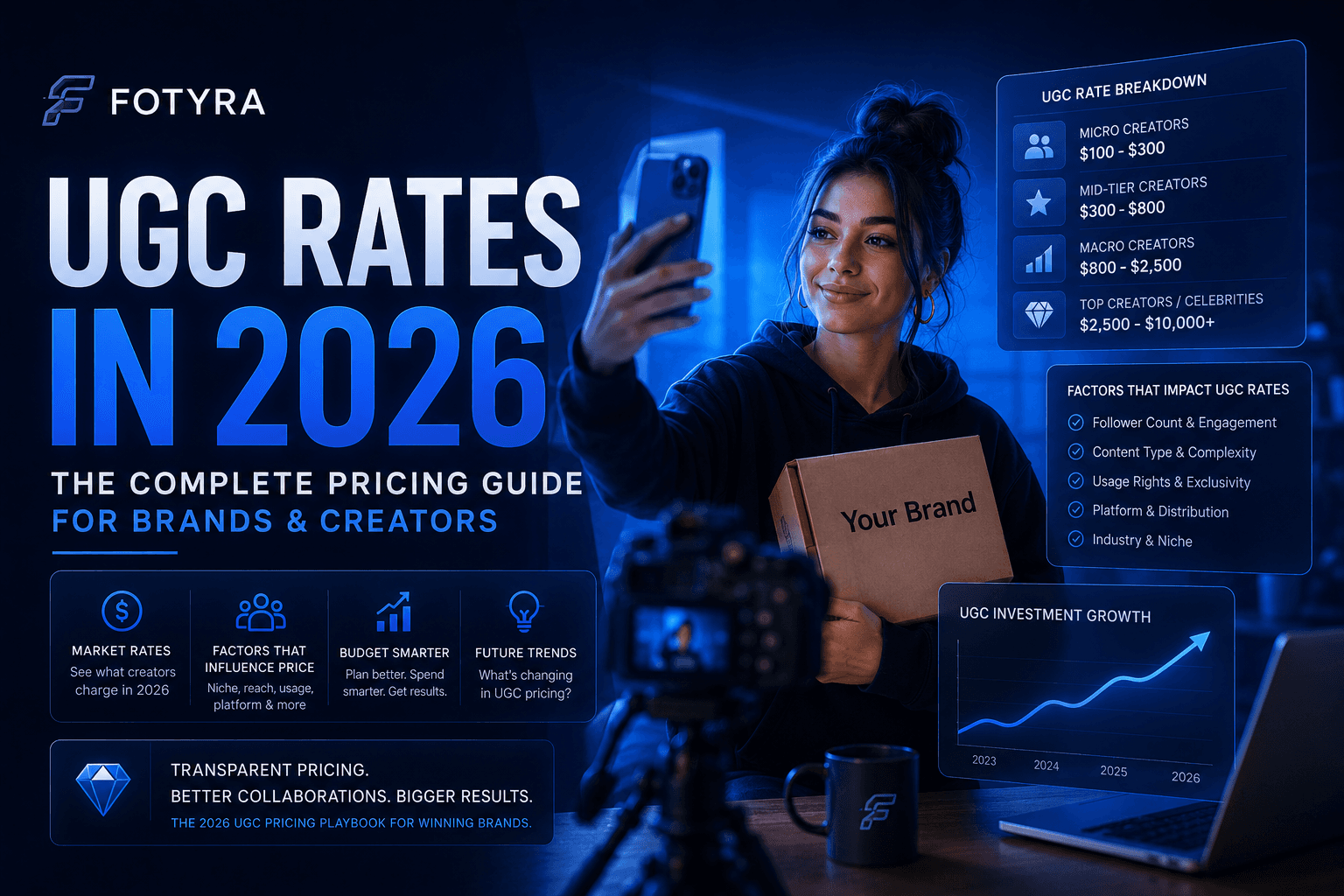
TL; DR: UGC rates in 2026 typically fall between $150 and $300 per video for standard organic content, with the full market spanning $75 to $3,000+. Beginner creators charge $75–$300, mid-tier creators charge $300–$1,000, and top-tier or specialist creators charge $600–$3,000+ per video. Usage rights, niche, and content complexity push the final price up or […]